Jump to:
There’s a space in your garden, but nothing that pulls you out into it. No spot to sit with a drink, no cover from rain or wind, and no reason to spend more time there. That’s what a summer house is for.
We’ve been designing and supplying summer houses to UK gardens since 2000, and the question we get asked most often isn’t which one should I buy — it’s what would I actually use it for? Read on for what we’ve learned about getting the most out of one.
What Is a Garden Summer House?
A summer house is a garden building that trades sections of panels for glazing to open up the structure. Its floor-to-ceiling windows are what make it an ideal retreat for relaxing and spending time in, especially during the warmer months.
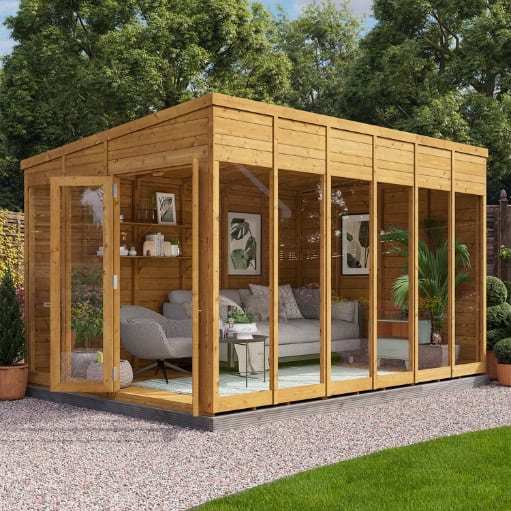
If you take a look at the BillyOh Bella, for instance, you’ll notice the wrap-around, full-length windows, with glazing concentrated on the front and the adjacent sides. This gives you a panoramic view of the garden while keeping the back wall solid for privacy or for placing furniture or shelving against it.
While the name suggests “summer” use, a summer house isn’t restricted to July and August. It can be enjoyed from around March through to October, with insulation added for extended use.
That can be fitted as an upgrade, allowing you to use a summerhouse in winter as well. Or skip the DIY modification risks and go for an insulated summer house instead.
Note: Summer houses often have more glazing compared to log cabins and other garden rooms, but window size alone doesn’t define them.
Different Uses for a Summer House
There’s more than one way to use a garden summer house beyond just a sheltered sitting corner. Some of the popular ones are:
Garden bar
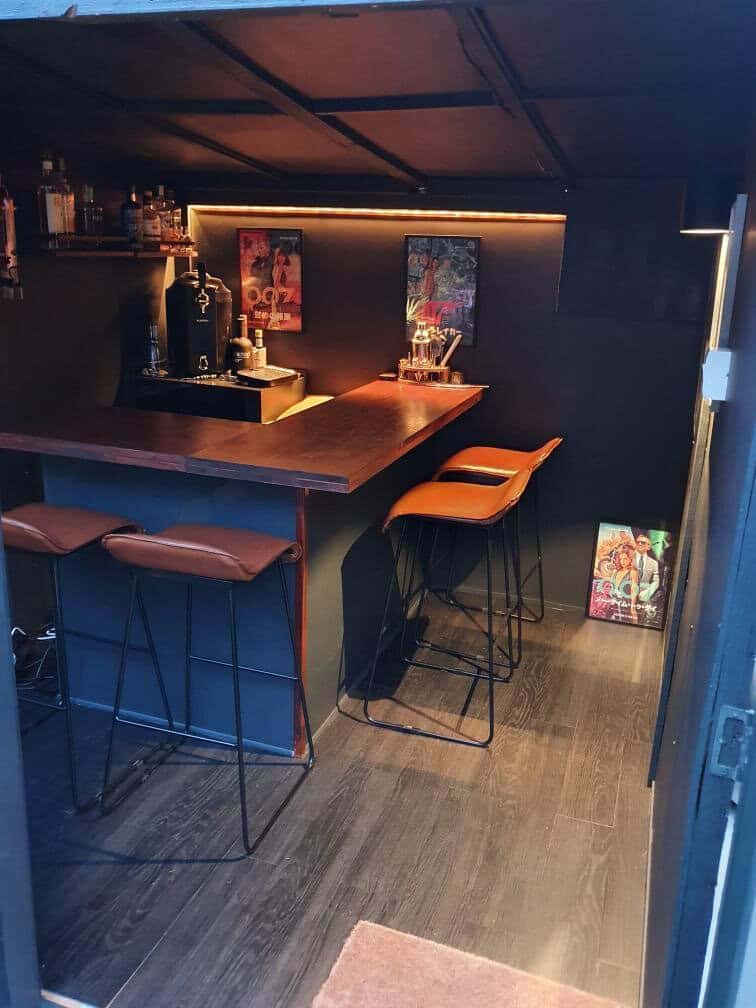
This is arguably the most popular upgrade right now. Instead of trekking back and forth to the kitchen, you install a counter and a workspace behind it for making drinks, where you can see the view of your garden from there.
Even if not all your guests won’t fit inside, you can always extend it out onto the lawn. The glazing still keeps it connected to what’s going on outside, so it doesn’t feel cut off from the rest of the space.
A summerhouse bar also works a lot better than one of those “pub sheds” with a service hatch — sure, they work great for summer garden parties. But the rest of the year, they’re hardly ever used, because you’re stuck sitting outside, where it’s not usually warm enough.
Private gym
Doing a HIIT workout is best done in a gym, even better if it’s your gym. Many summer houses come with 11mm tongue-and-groove floorboards, but on their own they’re not suited to heavy equipment, movement, and repeated impact over time.
The good thing is that standard flooring can be paired with rubber gym mats on top for impact protection, or built up with a double layer (e.g. 18mm OSB3 boards) to make it more suitable for gym use.
Insulation can also be a big factor for gym usage. It’s not just about it being warm enough — it’s about keeping it cool, too. One option is to go for a log cabin summerhouse unit, which offers thicker log walls by default.
Get more tips from our summerhouse gym ideas to build your own private workout space.
Garden office
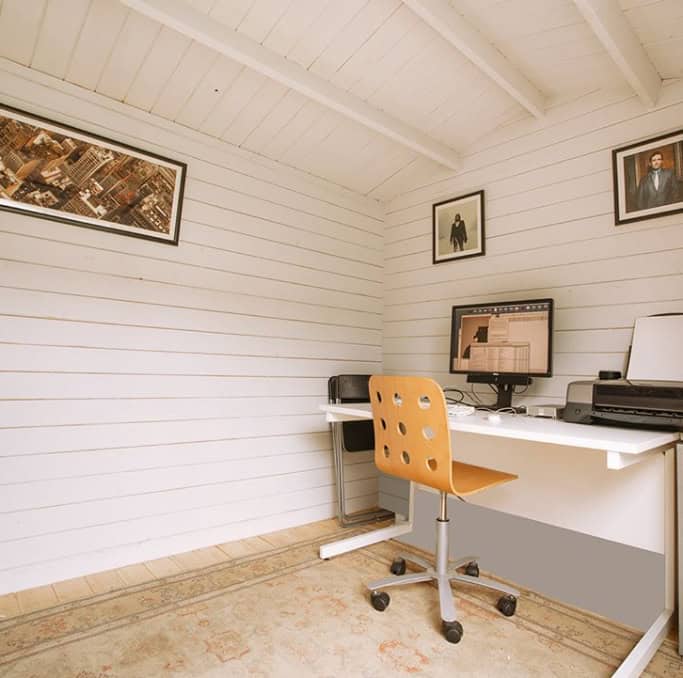
With more people working remotely, the dining table isn’t cutting it anymore. And if you’re one of them, a summer house can give you a break between home and work.
It’s a common choice alongside log cabins for this kind of setup because it brings in more natural light. A summer house also has a lighter build and a more open design. It might not have the same thickness in the wall panels, but it can still be fitted with insulation and electrics to make it workspace-ready.
This guide looks at using a summer house as a garden office in detail.
Shop Summer House Garden Offices
Creative studio
Whether it’s painting, pottery, or writing, hobbies take up space. A summer house gives you a dedicated area that’s easier to commit to for ongoing creative work.
The open-plan inside makes the perfect space for an easel, table, or storage. Switch between different parts of a project without moving things around each time. Plus, the natural light is far superior to any overhead LED in your spare room. It’s the kind of difference you only really appreciate once you’ve worked in one.
Why a Summer House Is Better Than a Home Extension
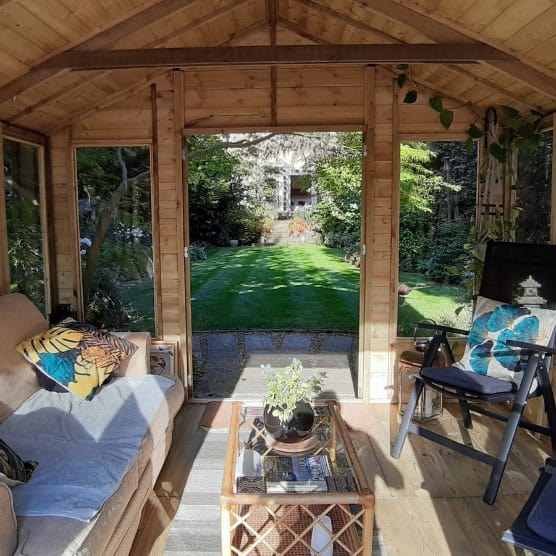
You might wonder why you wouldn’t just extend your house. There are three main reasons:
- Cost: A summer house is significantly cheaper than a brick-and-mortar extension. You get the extra square footage without the steep price tag of a contractor and an architect. We created this summerhouse cost guide for your reference.
- Planning permission: In many cases, summer houses fall under “permitted development.” As long as they meet certain height and size requirements, you don’t need to wait months for council approval. Learn more about summer house planning permission for compliance.
- Connection to nature: This might sound a bit dramatic, but a summer house is part of the garden, while an extension is still part of the house. That link to the garden changes how the space is used day to day, especially when the weather is good.
A summerhouse is a worthwhile lifestyle upgrade, especially if you love spending time in your garden. You can use it to cover whatever your home is missing in a cost-effective way, without the delays and disruption of construction work. With insulation and a heater, it doesn’t have to be limited to summer use.
Now that you get the point of having one in your garden, it’s time to find the perfect one for you.
FAQ
What is the difference between a summer house and a log cabin?
The difference is in the wall construction and thickness. A summer house uses thinner wooden panels, usually around 7mm to 12mm, fixed to a frame. This makes it lighter and more suited to seasonal use.
A log cabin is built from much thicker interlocking logs, typically 28mm to 70mm+, that slot together for a solid structure. The extra thickness makes log cabins stronger and better at retaining heat in colder months.
Will my summer house rot if I don’t treat it?
Yes. Unless you’ve bought a pressure treated summer house, the timber is essentially untreated when it arrives.
Without a water-repellent treatment or wood stain applied after assembly, moisture will soak into the wood over time. This can lead to softening, rot, and fungal growth if it’s left unprotected. Regular re-treatment every 1 to 2 years is needed to keep it in good condition.
Can I run electricity to a summer house safely?
Yes, but it shouldn’t be done with a standard extension lead. To do it safely and legally, you need an armoured cable buried underground and connected to your home’s consumer unit by a qualified electrician. This allows you to run heaters, garden bar fridges, or office equipment without risking a fire or a short circuit.
Alternatively, you can go off-grid when it comes to heating. Read our guide to heating a summer house without electricity to learn more.